Past Events
5th EU–India Education Summit 2025
Learning Without Borders - Partnerships for Education, Employability & Mobility
Overview
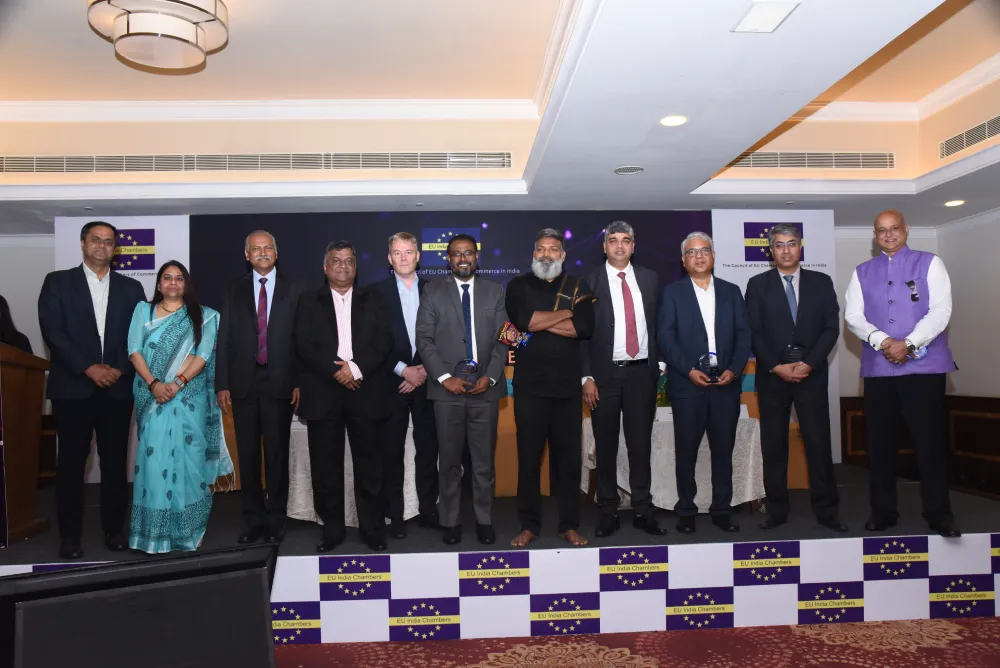
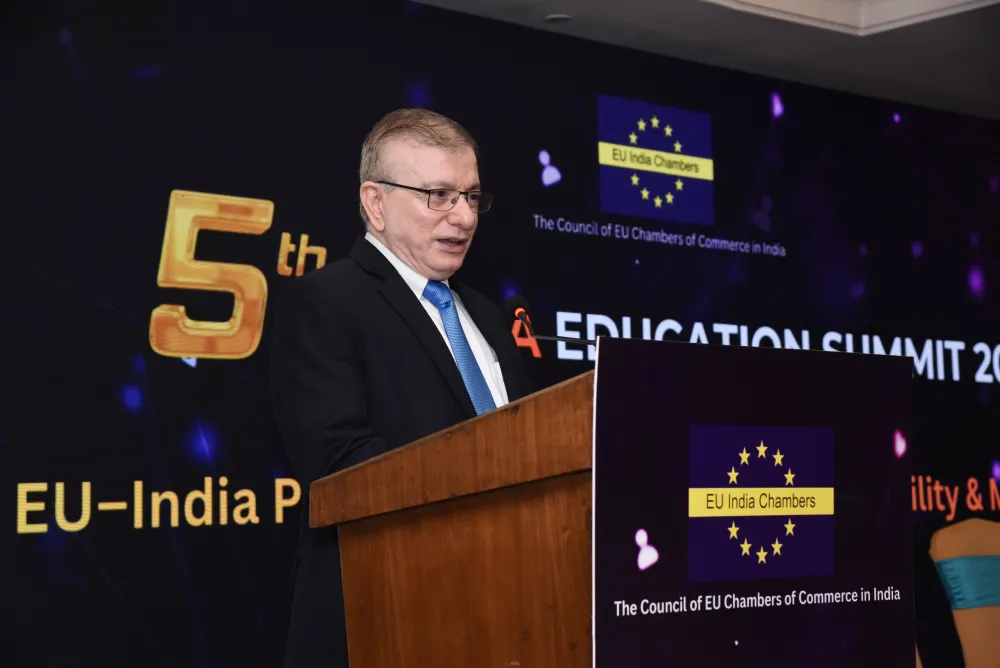
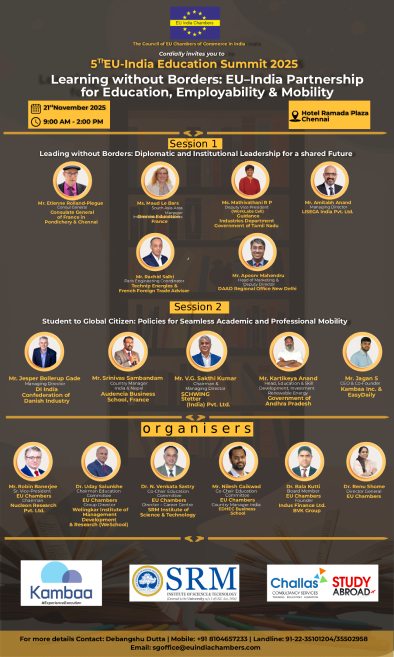
The Council of EU Chambers of Commerce in India hosted the 5th EU-India Education Summit in Chennai. Moving under the foundational theme, "Learning Without Borders: EU-India Partnership for Education, Employability & Mobility", the milestone summit convened prominent diplomats, state authorities, and academic leaders. The event served as a critical platform to evaluate cross-border academic frameworks, address acute talent shortages, and formulate structured, future-ready pathways that effectively connect Indian human capital with European industrial ecosystems.
Theme and Agenda
The central theme focused heavily on accelerating structural academic mobility and lowering international entry barriers for regional students. The comprehensive agenda featured the traditional ceremonial lighting of the lamp by key leadership figures, establishing an immediate focus on institutional alignment. The summit's operational tracking targeted deep curriculum modernization, the rapid integration of Artificial Intelligence (AI) into learning management systems, and the design of inclusive, affordable study-abroad models. Furthermore, state-level international scaling initiatives were examined alongside strategic government-academia engagements to build trusted talent corridors.
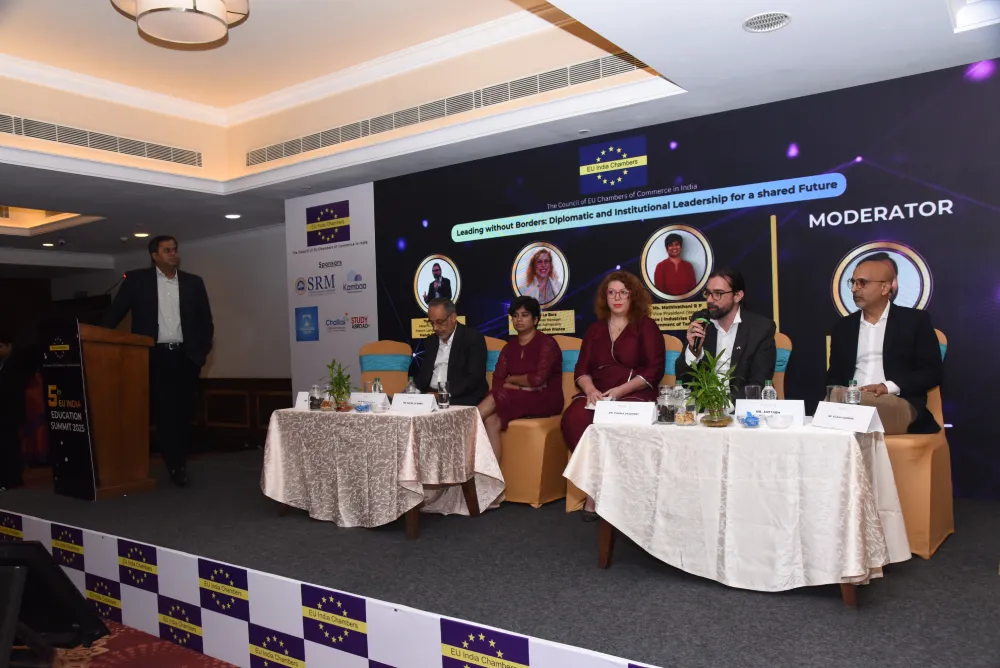
Panel Discussion I: Diplomatic and Institutional Leadership for a Shared Future
This session explored transforming engineering and technical education to meet the emerging skillsets demanded by modern global markets. Panelists analyzed tactical funding architectures, emphasizing a rising corporate trend where industries directly finance students for international exposure and equity-based academic support models. The conversation detailed the integration of specialized language schools, European exchange fellowships, and resource optimization strategies. Ultimately, the leaders established that maintaining absolute affordability and deep industry-academia collaboration is essential to developing globally connected, sustainable educational ecosystems.
Panel I: Diplomatic and Institutional Leadership for a Shared Future
Mr. Nilesh Gaikwad
Guided the dialogue around technical resource optimization, institutional trust, and aligning engineering curricula with industry demands.
Ms. Maud Le Bars
Shared insights on European exchange frameworks and creating continuous, adaptive learning pathways for international students.
Ms. Mathivathani R P
Focused on the role of regional educational models, fellowships, and study-abroad pipelines specifically within Tamil Nadu.
Mr. Thomas Chaumont
Detailed advanced scientific research opportunities, academic standard synchronization, and institutional partnerships in France.
Mr. Rachid Salhi
Addressed the integration of AI tools in streamlining academic operations and building future-ready institutional training setups.
Mr. Amitabh Anand
Evaluated industry-backed financial models, emphasizing corporate-funded international exposure to ensure inclusive and affordable access.
Panel Discussion II: Student to Global Citizen: Policies for Mobility
The second panel examined the overarching policy frameworks required to ensure seamless cross-border academic and professional transitions while addressing Europe’s shifting demographics and aging population. The experts focused on utilizing reverse engineering and high-quality digital tools to enhance graduate competence, mitigate declining talent quality, and drive global entrepreneurship. Additionally, the dialogue outlined concrete strategies to eliminate localized language barriers, scale equitable country-wide skilling opportunities, and align domestic university curricula with international benchmarks to meet global expectations of adaptability and technical readiness.
Panel II: Student to Global Citizen: Policies for Mobility
Mr. Rajiv Gupta
Steered the discussion on state-level international placement scaling, regulatory compliance, and driving seamless professional mobility.
Mr. Jesper Bollerup Gada
Analyzed European Union mobility policies designed to navigate demographic transitions and regional skill shortages.
Mr. Srinivas Sambandam
Outlined government intervention strategies for designing uncomplicated, highly effective international talent migration policies.
Mr. Jagan S
Focused on the practical application of digital learning tools to raise graduate quality and enhance international corporate readiness.
Mr. V. G. Sakthi Kumar
Emphasized corporate-academia placements, infrastructure innovation, and localized industry training collaborations to improve overall quality of life.
Mr. Kartikeya Anand
Addressed curriculum reform pathways aimed at minimizing language barriers and ensuring equitable nationwide access to specialized technical skilling.
Mr. Apoorv Mahendru
Provided expert perspectives on international research networks, standardizing global entry requirements, and fostering cross-border institutional trust.
Key Speakers & Panelists
Inaugural Ceremony Dignitaries
Ceremonial Leaders - Collectively spearheaded the inaugural ceremony, setting a collaborative, high-impact tone for the bilateral summit.