Past Events
6th EU–India Education Summit 2026
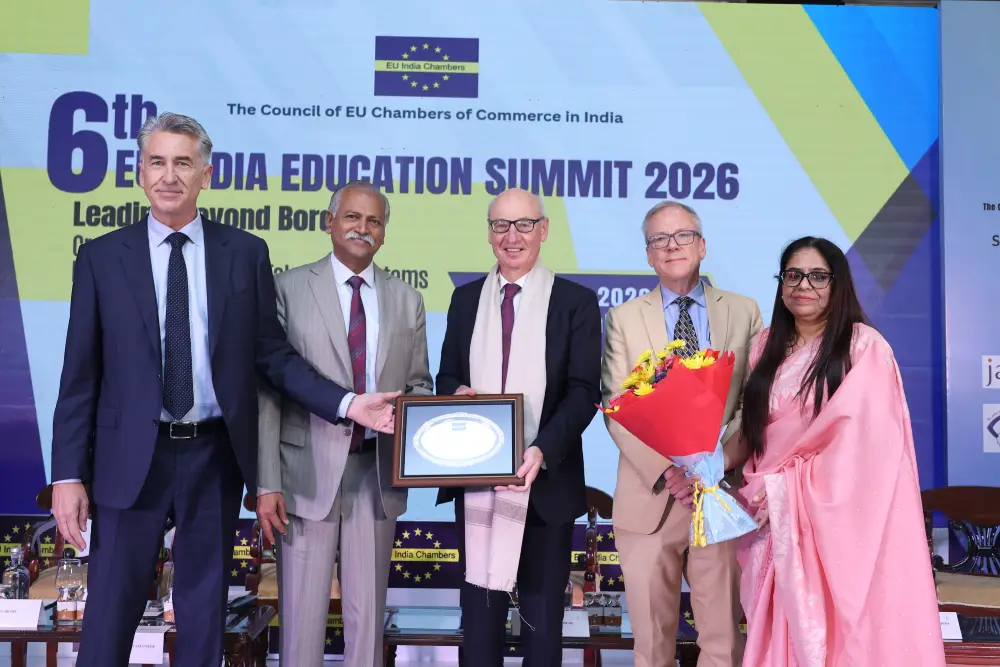
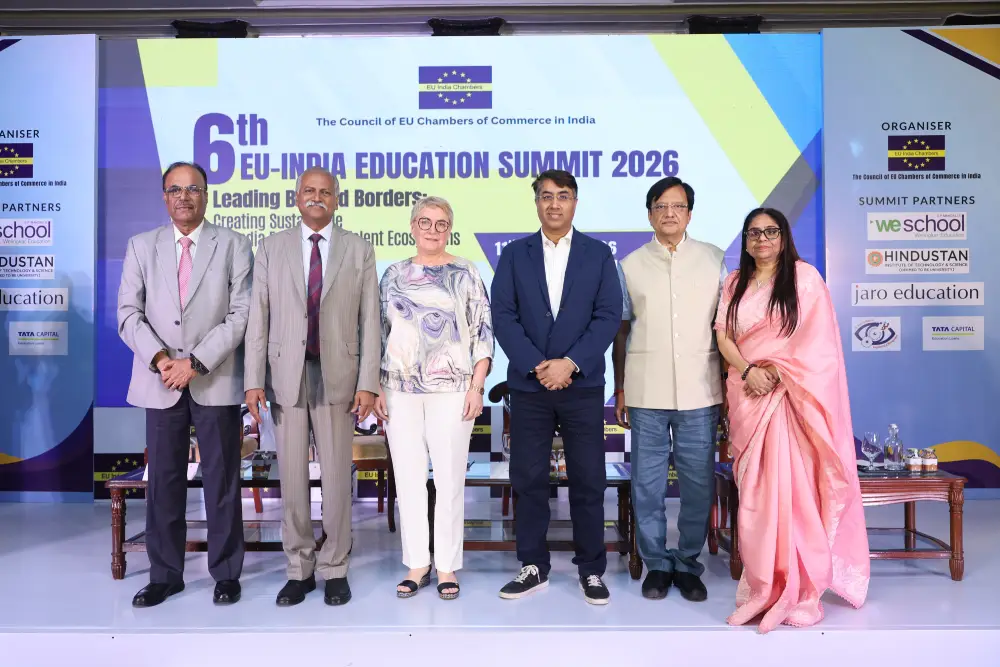
The Council of EU Chambers of Commerce in India successfully concluded the 6th EU-India Education Summit on 11th March 2026 the Taj Mahal Palace, Mumbai.
Overview
The Council of EU Chambers of Commerce in India hosted the milestone 6th EU-India Education Summit on March 11, 2026. Centered around the theme "Leading Beyond Borders: Creating Sustainable EU-India Education & Talent Ecosystems", the summit convened top diplomats, government dignitaries, and academic leaders. The event highlighted a critical turning point in economic diplomacy, shifting focus from traditional, episodic student exchange programs toward deep-rooted, long-term institutional alliances to actively balance Europe's demographic aging with India's massive demographic dividend.
Theme and Agenda
The comprehensive agenda focused heavily on creating structured, future-ready pathways for cross-border academic mobility and democratic talent corridors. A major theme was the integration of Artificial Intelligence (AI) into higher education, establishing that shared technological standards for ethics, data protection, and algorithmic transparency are now essential to workforce readiness. The summit featured dual strategic sessions dedicated to establishing joint degree programs, co-funded research platforms, and innovative education financing, while diplomatic bodies discussed aligning institutional governance with future global skill demands.
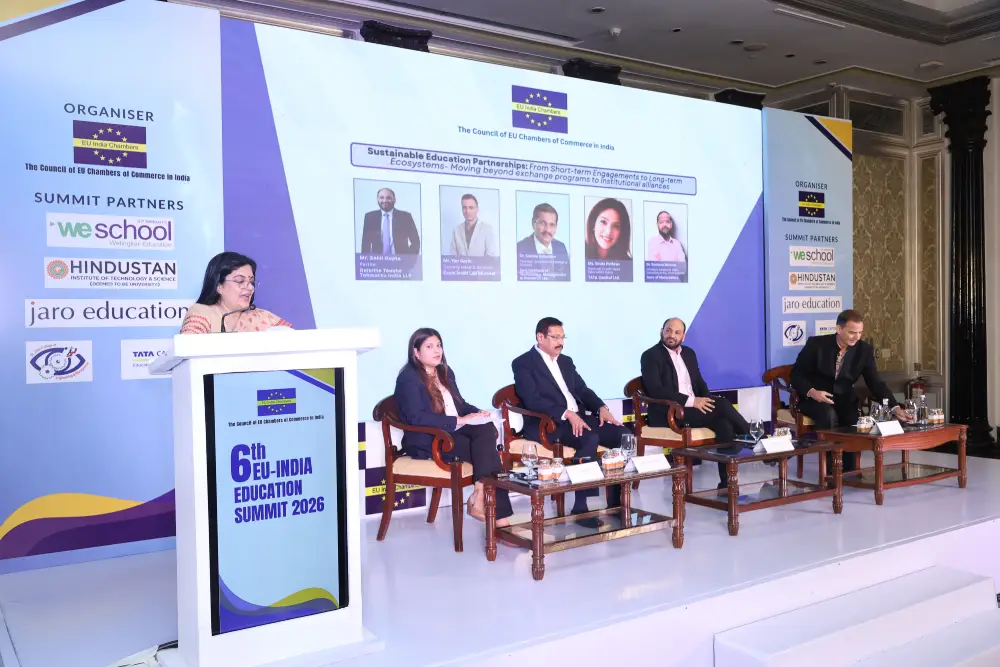
Panel Discussion I: Moving Toward Long-Term Ecosystems
This session focused on transforming academic partnerships from isolated events into self-sustaining, long-term commercial and educational frameworks. Industry and academic leaders analyzed the immediate necessity of designing joint curriculums that actively embed industry-integrated learning directly into traditional university tracks. Tactically, the panel addressed the role of innovative education finance and tailored student credit structures, ensuring that advanced global education models remain economically viable and practical for a broader demographic of Indian students.
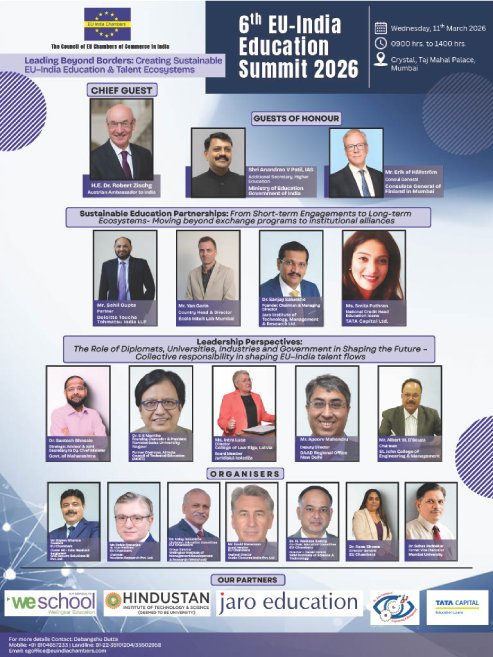
Panel I: Moving Toward Long-Term Ecosystems
Mr. Sahil Gupta
Guided the dialogue around educational funding mechanics and industry-academia synergy.
Mr. Yan Garin
Advocated for localized, industry-integrated learning modules to bridge the gap between creative execution and global commercial expectations.
Dr. Sanjay Salunkhe
Addressed tech-driven executive education and scalable joint-curriculum designs tailored for corporate environments.
Ms. Smita Puthran
Detailed structured education financing solutions aimed at lowering entry barriers for international academic tracks
Panel Discussion II: Leadership and Collective Responsibility
The second discussion examined the governance architectures required to support a highly fluid, sustainable bilateral talent marketplace. Panelists concentrated on updating modern institutional compliance to meet the rapidly shifting technical needs of global employers. A significant portion of the dialogue was dedicated to administrative and diplomatic facilitation, with experts evaluating how targeted institutional governance and diplomatic cooperation can create trusted, highly efficient visa pathways to support safe, seamless cross-border mobility.
Panel II: Leadership and Collective Responsibility
Dr. S. S. Mantha
Steered the panel on systemic academic governance and aligning technology curriculums with Industry 4.0/5.0 benchmarks.
Ms. Intra Luce
Discussed European legal education standards and fostering trusted cross-border academic credit transfers.
Mr. Apoorv Mahendru
Shared key insights into international research funding, fellowship structures, and building institutional research networks.
Mr. Albert W. D'Souza
Focused on engineering institute governance and preparing students for the ethical demands of an AI-centric global workforce.
Key Speakers & Panelists
Inaugural & Dignitary Sessions
Mr. David Stevenson
Opened the summit with the formal welcome address, establishing education as a core pillar of modern economic diplomacy.
Prof. Dr. Uday Salunkhe
Delivered the theme introduction, emphasizing the urgency of moving from episodic student exchanges to long-term talent ecosystems.
H.E. Dr. Robert Zischg
Outlined the bilateral opportunities connecting European academic infrastructure with India's expanding technical talent pool.
Shri Anandrao V. Patil, IAS
Highlighted national educational policy objectives and government support for structured international university collaborations.
Hon. Mr. Erik af Hällström
Shared Nordic best practices in innovation-led education and building safe mobility frameworks.
Dr. Renu Shome
Delivered the keynote address, focusing on the macro economic impact of building highly resilient, AI-enabled bilateral talent corridors.
Closing Session
Dr. Venkata Sastry (Co-Chairman, Education Committee, EU Chambers) - Concluded the event with the official vote of thanks, acknowledging corporate summit partners (including We School, Jaro Education, and Tata Capital) and reinforcing the long-term vision of a sustainable talent corridor.